
I’ve been thinking about a simple question: what would our work, our retirement, and the rest of our lives look like if they were built entirely on biblical values?
The world has plenty of answers. Work is how you get ahead. Retirement is the prize at the end, a long stretch of leisure you earned. Life is about comfort, options, and making sure you have enough.
Scripture starts somewhere else. “The earth is the LORD’s and the fullness thereof, the world and those who dwell therein” (Psalm 24:1). Everything already belongs to God. We don’t own our jobs, our savings, or our years. We hold them in trust. That one truth changes all three.

Work as a calling
If God owns the work, then the work is a calling, not just a paycheck. Paul told servants and masters alike to work “heartily, as for the Lord and not for men” (Colossians 3:23). He wasn’t writing to a room full of pastors. He was writing to ordinary people doing ordinary jobs. The Lord is the One we finally answer to.

That kind of work is honest and diligent. “A slack hand causes poverty, but the hand of the diligent makes rich” (Proverbs 10:4). It is fair in both directions. Employees honor those over them; employers remember they have a Master in heaven (Ephesians 6:5–9). Nobody gets to hide behind a title, and nobody is too ordinary for the work to matter.
It also has a purpose beyond the person doing it. We work so we can provide for our families and have something to give away. “Let the thief no longer steal, but rather let him labor, doing honest work with his own hands, so that he may have something to share with anyone in need” (Ephesians 4:28). And “if anyone does not provide for his relatives, and especially for members of his household, he has denied the faith” (1 Timothy 5:8). Providing is not greed. It is love.
And then we rest. One day in seven, we stop. Sabbath is not a productivity trick. It is a confession: the world does not sit on our shoulders. We can lay the work down because God never does.
Retirement is a change of role
Scripture never really pictures what we call retirement: quitting useful work so we can finally live for ourselves. It pictures a change of role.
The Levites stepped back from the heavy labor of the tent of meeting at fifty, but they were not sent home to sit. They were to “minister to their brothers in the tent of meeting by keeping guard, but they shall do no service” (Numbers 8:25–26). The load lightened. The service continued.
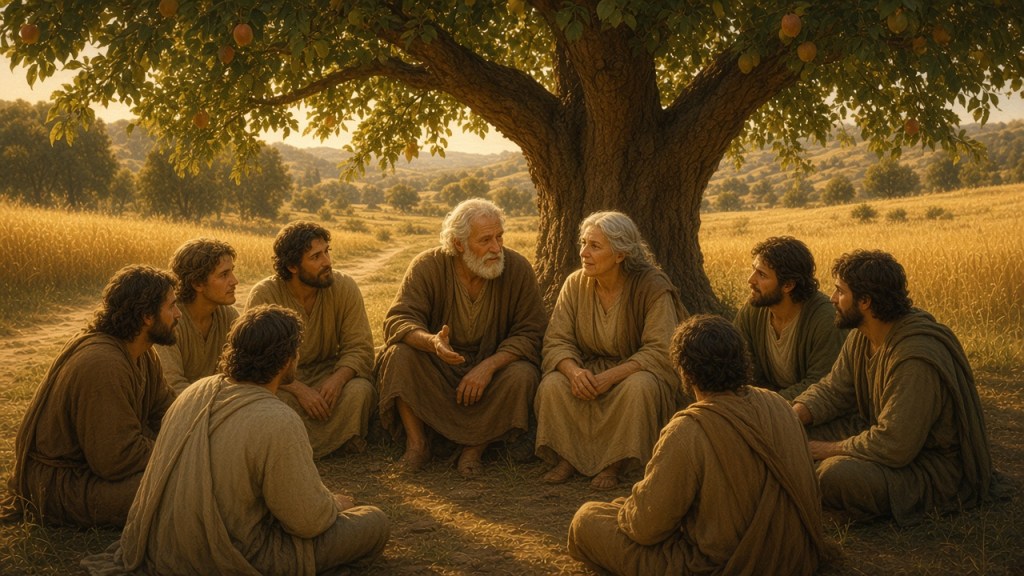
That is closer to God’s design for later years than a cruise catalog. Older men and women are told to be sober-minded, dignified, and sound in faith, and to teach what is good so the young can be trained (Titus 2:2–5). “They still bear fruit in old age; they are ever full of sap and green” (Psalm 92:14). The goal is not to become useless. It is to become fruitful in a different way: discipling, giving, serving the church, investing in grandchildren, praying for people who still have their hands full.
Saving is part of this, and it is wise. The ant stores in summer (Proverbs 6:6–8). “Precious treasure and oil are in a wise man’s dwelling, but a foolish man devours it” (Proverbs 21:20). Planning ahead is not unbelief. But Jesus also told of a man who tore down his barns to build bigger ones and said to his soul, “Relax, eat, drink, be merry.” God called him a fool, because that very night his soul was required of him. He had laid up treasure for himself and was “not rich toward God” (Luke 12:16–21).
Retirement that only means leisure is the rich fool with a better financial planner. Freedom from a paycheck can be a gift, if we spend it on people and on the Lord’s work.
The rest of life
The same stewardship reaches into everything else. “Seek first the kingdom of God and his righteousness, and all these things will be added to you” (Matthew 6:33). God first, not God when convenient.
That produces contentment. “Godliness with contentment is great gain, for we brought nothing into the world, and we cannot take anything out of the world” (1 Timothy 6:6–7). The love of money is a snare (1 Timothy 6:9–10). We stay out of debt where we can, because “the borrower is the slave of the lender” (Proverbs 22:7). And we give, not grudgingly, but as people who know the money was never ours: “God loves a cheerful giver” (2 Corinthians 9:7). Firstfruits, not leftovers.
Family comes before career. A job can feed a household, but it is not allowed to replace one. The local church is not an optional weekend activity; it is the community Christ gave us, the place where we worship, are taught, and learn to love people we did not choose. Hospitality becomes normal, a table open to others, not only to people who can repay us.
And our eyes stay on eternity. “Do not lay up for yourselves treasures on earth… but lay up for yourselves treasures in heaven… For where your treasure is, there your heart will be also” (Matthew 6:19–21). Comfort is not the goal. Faithfulness is.
What it comes down to
Micah said it in a single sentence: “He has told you, O man, what is good; and what does the LORD require of you but to do justice, and to love kindness, and to walk humbly with your God?” (Micah 6:8).
That is a life built on Scripture. Not a life with a little Bible added on. A steward’s life: work done for the Lord, later years still spent on people, and a heart that knows who owns it all.
Discover more from Bob Graham's Blog
Subscribe to get the latest posts sent to your email.

